Acetaminophen (also called paracetamol) is a medicine used to reduce fever and pain. It is sold as a generic or store brand and under brand names such as Tylenol®, Feverall®, Tempra®, Actamin®, and Panadol®. In the United States, acetaminophen is sold "over-the-counter," meaning that you can get it without a doctor's prescription.
Giving the wrong amount of medicine is one of the biggest mistakes parents make when giving acetaminophen to children.
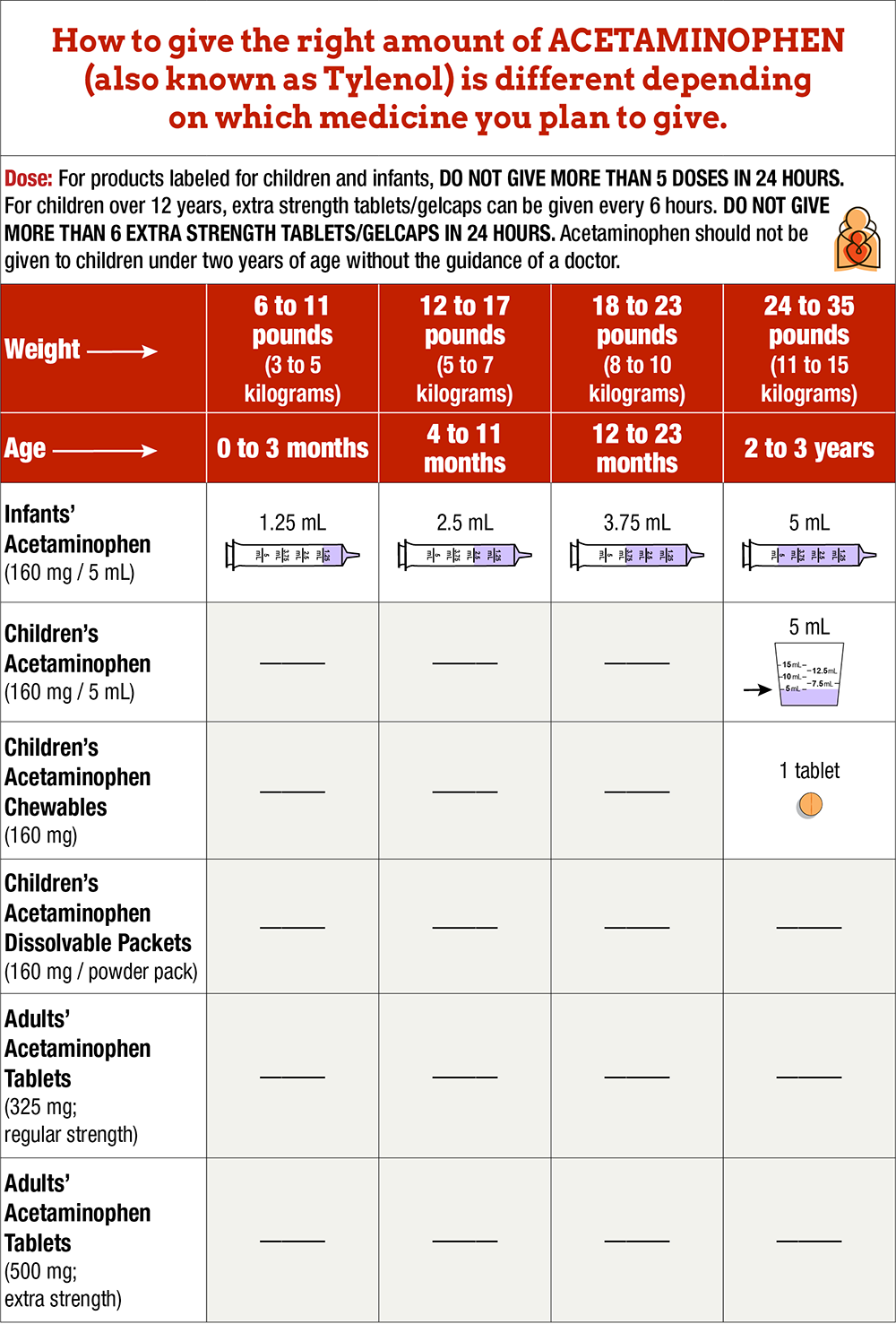
The tables* below can help you figure out what dose to give.
(Find a print-friendly version
here.) Use your child's weight to decide on the right amount. If you do not know your child's weight, use your child's age. Be sure to check with your child's doctor to make sure you are giving the right amount.
An oral syringe is best for liquid medicine
An oral syringe is the most accurate way to measure and give your child liquid medicine. However, for older children, it is acceptable to use the dosing cup that comes with liquid medicine. Depending on the dose your child needs, you may need to get a syringe from your pharmacy.
Acetaminophen Dosage Table for Fever & Pain: Birth to 3 Years of Age:
Acetaminophen Dosage Table for Fever & Pain: Age 4 Years and Older:
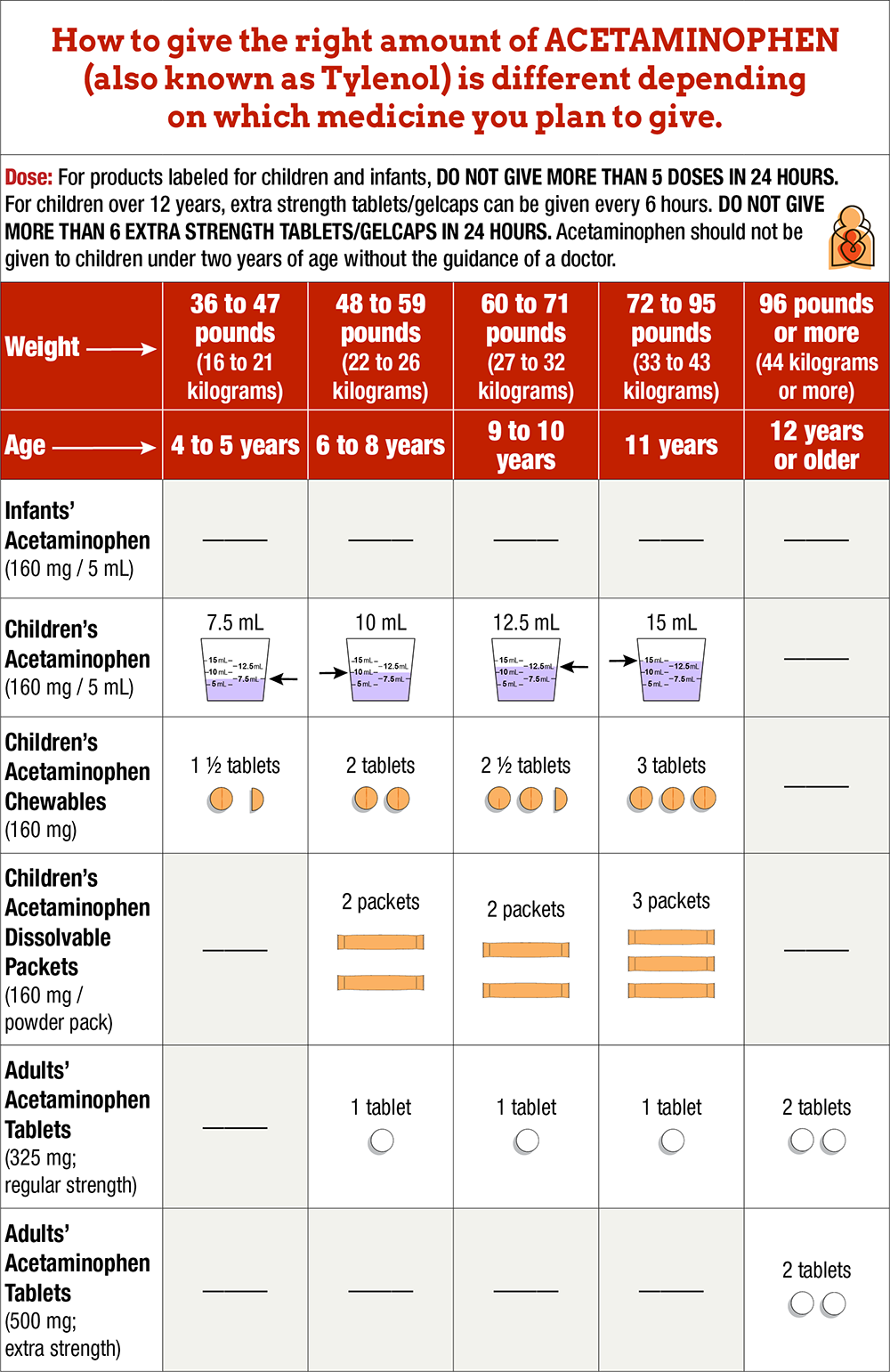
*Table notes:
Standardized dosing: In 2011, the U.S. Food and Drug Administration (FDA) recommended liquid, chewable, and tablet forms of acetaminophen be made in just one strength. Since that time, the companies that make pediatric acetaminophen have voluntarily worked to change the amount of acetaminophen in these medicines to one standard amount (160 milligrams [mg]). Liquid syrup acetaminophen is available as 160mg/5mL. Dissolvable powder packs are available for children ages 6–11 years old and 48–95 pounds. Pediatric acetaminophen products on store shelves should be used as labeled and with the dosing syringe that came with the medicine.
Acetaminophen should not be given to children under 2 years of age without the guidance of a doctor. Fever in the first 12 weeks may signal a serious infection and needs immediate medical attention; your baby will need to be checked in a health care setting to see what tests are needed. For children under 2 years, it's generally recommended to check with your doctor before giving acetaminophen to ensure correct dosing and safety. (Note: Fever may happen
after a vaccine. If this occurs, talk to your child's doctor.)
Medicines with more than 1 ingredient (also called combination products): It is best not to give medicines with more than one ingredient to children less than 6 years of age.
Measuring the dose for
liquid medicines (should be in "mL" or metric units): It is easier to give the right amount of liquid medicine when using a syringe. (Never use a kitchen teaspoon or tablespoon.)
Use the dosing syringe that comes with the medicine. If the medicine does not come with a dosing syringe, ask your pharmacist for one.
How often to give the medicine (frequency): For children under 12 years, give every 4 hours while symptoms last.
Do not give more than 5 doses in 24 hours. For children over 12 years, extra strength acetaminophen can be given every 6 hours.
Do not give more than 6 extra strength tablets/gelcaps in 24 hours.
Disintegrating tablets and suppositories are not recommended for use in children (unless directed by a doctor).
Extra strength: Do not give 500 mg oral extra strength products to children under 12 years of age.
Extended-release: Do not give 650 mg oral extended-release products to children under 18 years of age.
More information