Hives, also known as urticaria, are raised welts or wheals that can develop suddenly anywhere on the body. They usually flatten out and disappear over the course of hours. They can continue to reappear on different parts of the body over the course of several days.
What do hives look like in children?
Hives can appear as small round bumps or as larger swellings of different shapes. Sometimes they are even ring or donut-shaped or shaped like a target. In children with light skin, hives usually appear red or pink. In children with dark skin, the hives may have a color that is similar to the surrounding skin, or slightly darker.
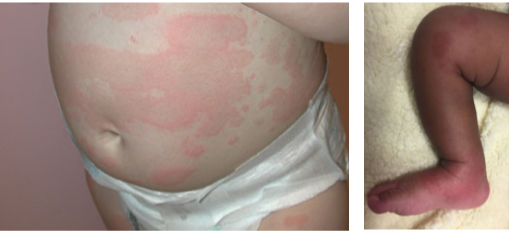
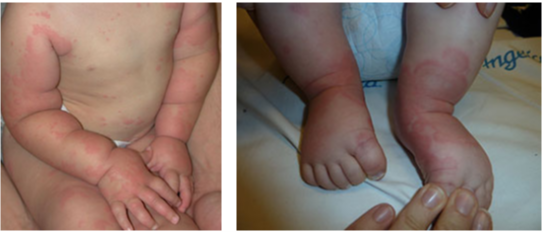
Clockwise from top left: hives (urticaria) on trunk, leg, arms and feet.
Do hives hurt?
Hives are typically itchy, but not painful. Some children with hives may also have noticable swelling of the hands, feet or other parts of the body, like the face. This can be uncomfortable.
Who gets hives and how common are they?
Children and adults of any age can get hives. Hives are very common, with about 20% of people developing hives at some point in their lives.
What causes hives?
Hives happen when certain immune system cells, such as mast cells, release a chemical called histamine. Histamine increases blood flow to the skin. Viral infections are one of the most common causes of hives in young children. Often, the child seems well and has no or very few other sick symptoms before the hives begin.
Sometimes hives are caused by an allergic reaction, which may be triggered by a food, medication or other things, such as an insect sting. Additional hives triggers include local irritants (something that touches and bothers the skin), exercise, stress and other physical factors such as pressure, heat and cold. In many cases, what triggers hives is unknown.
How long do hives last?
Typically, hives in a particular spot of the body disappear within hours. In most children, new episodes of hives will end within a few weeks. Occasionally the hives may continue to occur for weeks, months, or even years.
How are hives diagnosed?
Hives are usually easily recognized when seen by a healthcare provider. In most cases, there are no good tests to figure out why a child has hives. An exception is if the hives occur as part of an allergic reaction, to a food, medication or other allergen. In this case, your child's doctor may refer them to see an allergist.
How are hives treated?
If the hives are mild and not itchy or uncomfortable, no treatment is needed. If they are itchy and bothersome, your child's doctor may recommend an antihistamine medication (such as cetirizine).
Cool compresses, cool baths and loose clothing may also provide comfort for a child with hives. In some cases, a daily dose of antihistamine medications may be prescribed to help control the hives. If these are not helpful, the doctor may prescribe other treatments or refer your child to a specialist.
When should I be worried about hives?
Get medical help right away if your child has hives and also develops swelling of the face, lips, tongue or throat; trouble breathing or swallowing; vomiting; dizziness; or any other symptoms that worry you. These can be signs of a serious allergic reaction.
More information
*Images provided by Sheilagh Maguiness, MD, FAAD, FAAP